Layered abundance with a romantic, slightly informal edge. The "looks like it grew there" aesthetic -- built with Zone 4 plants that actually survive a Minnesota winter and return better each year.
Cottage Garden installations are the hardest to design well because the apparent looseness is deceptive. A planting that reads as naturally abundant actually requires careful calibration -- bloom timing, layer height, plant spread, and seasonal transitions all need to be considered so the yard looks full and alive at every point in the season, not just in one peak week.
The plant selection is also more constrained than it might appear. Many of the plants associated with English cottage gardens -- English lavender, butterfly bush, standard hybrid tea roses -- are Zone 5 or warmer. We rebuild the cottage aesthetic using Zone 4-proven equivalents: Serviceberry for flowering trees, Baptisia for blue vertical color, Carefree Beauty for repeat-blooming shrub roses, Catmint for the soft billowing edge.
This style works beautifully with craftsman, Victorian, and traditional homes where a more romantic, abundant planting style fits the era and scale of the architecture.
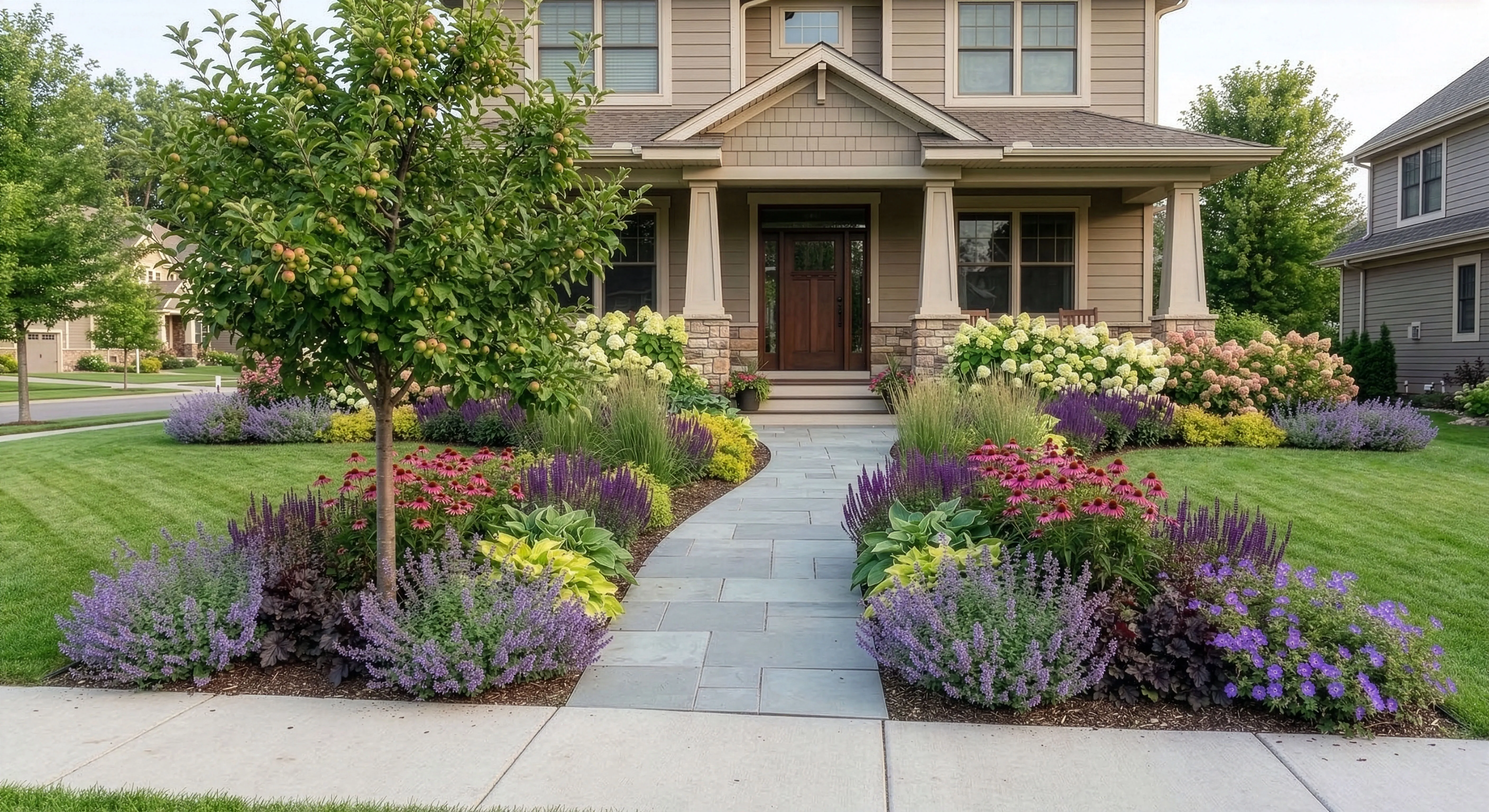
Generous beds line both sides of a wide stone entry walk, layered from front to back: purple salvia at the bed edge, pink coneflowers in the middle ground, and cream-white hydrangeas at the foundation. A small flowering tree at the back left adds vertical height at the corner. From the sidewalk, the composition spans the full facade as a continuous sweep of color.
Width is what makes this work. These beds were designed deep enough to allow three visible layers simultaneously -- low, mid, and tall -- rather than the single-row planting that often passes for a cottage garden. That depth is what creates the sense of abundance characteristic of this style; from the street it reads as lush rather than merely colorful.
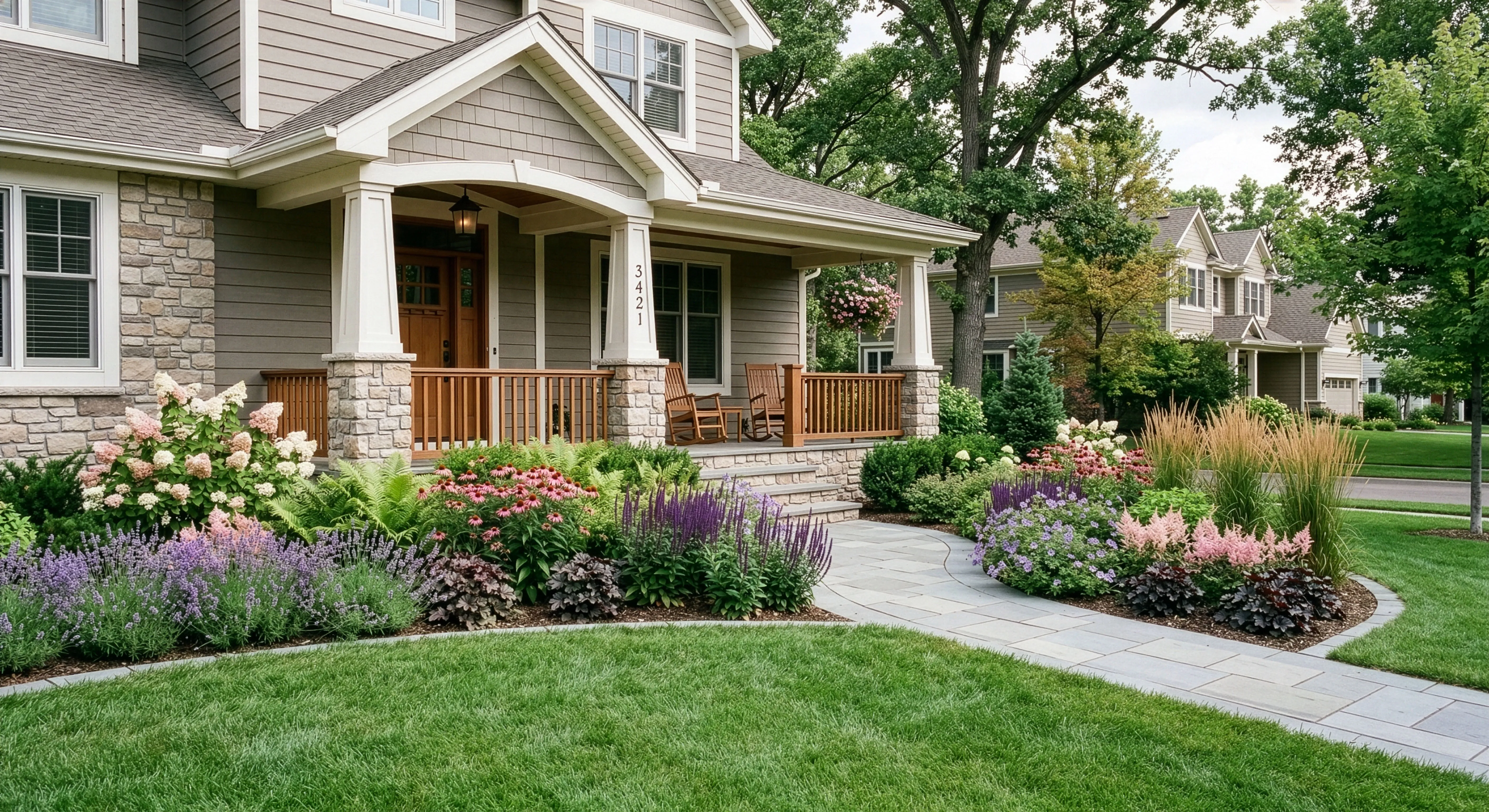
A craftsman bungalow with a deep covered porch, where the planting rises to meet the architecture. Lavender salvia in broad sweeps, pink astilbe plumes in feathery summer clusters, copper ornamental grass catching the afternoon light, and white hydrangeas along the foundation -- layered into a composition that is simultaneously full and organized.
The stone porch columns and wood railing provide the strong structural backdrop that allows the planting to be as exuberant as it is. A more minimal architecture would require a more restrained planting; here, the craftsmanship of the porch frame absorbs the visual energy of the beds and holds the composition together.
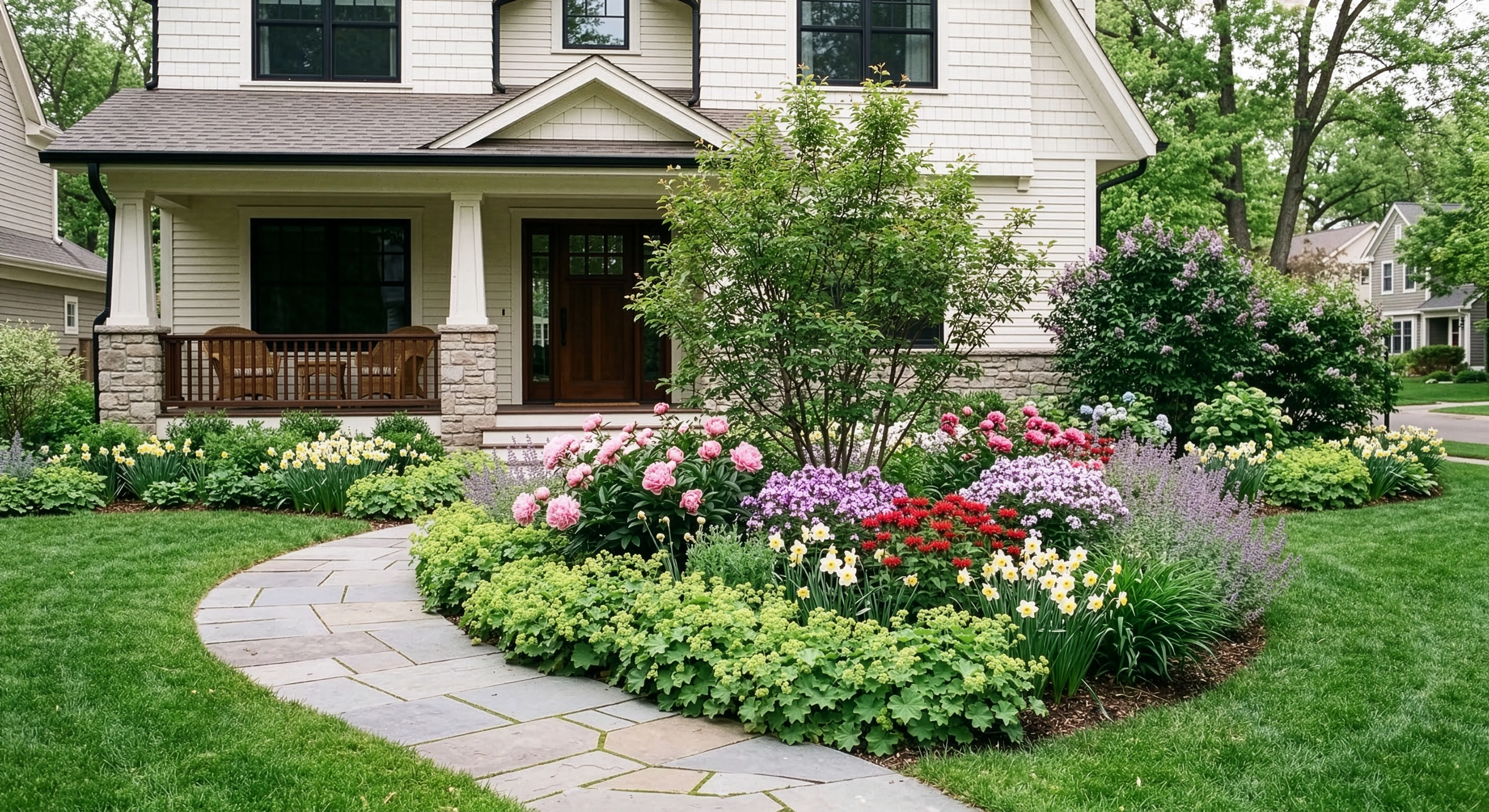
A circular island bed wraps around a stone path in front of a white craftsman, anchored by a small multi-stem flowering tree at center. Pink peonies and yellow daffodils dominate the spring composition; lavender catmint runs along the outer edge; a deeper-toned flowering shrub at the back provides visual mass against the house facade.
Spring-peak plantings in island beds require more design care because the plants involved -- peonies, spring bulbs, early perennials -- have shorter bloom windows and less structure between peak moments. The layering here ensures that as the daffodils finish in May, the peonies and catmint take over without visible gaps. The island format addresses all viewing angles simultaneously, which a foundation planting cannot.
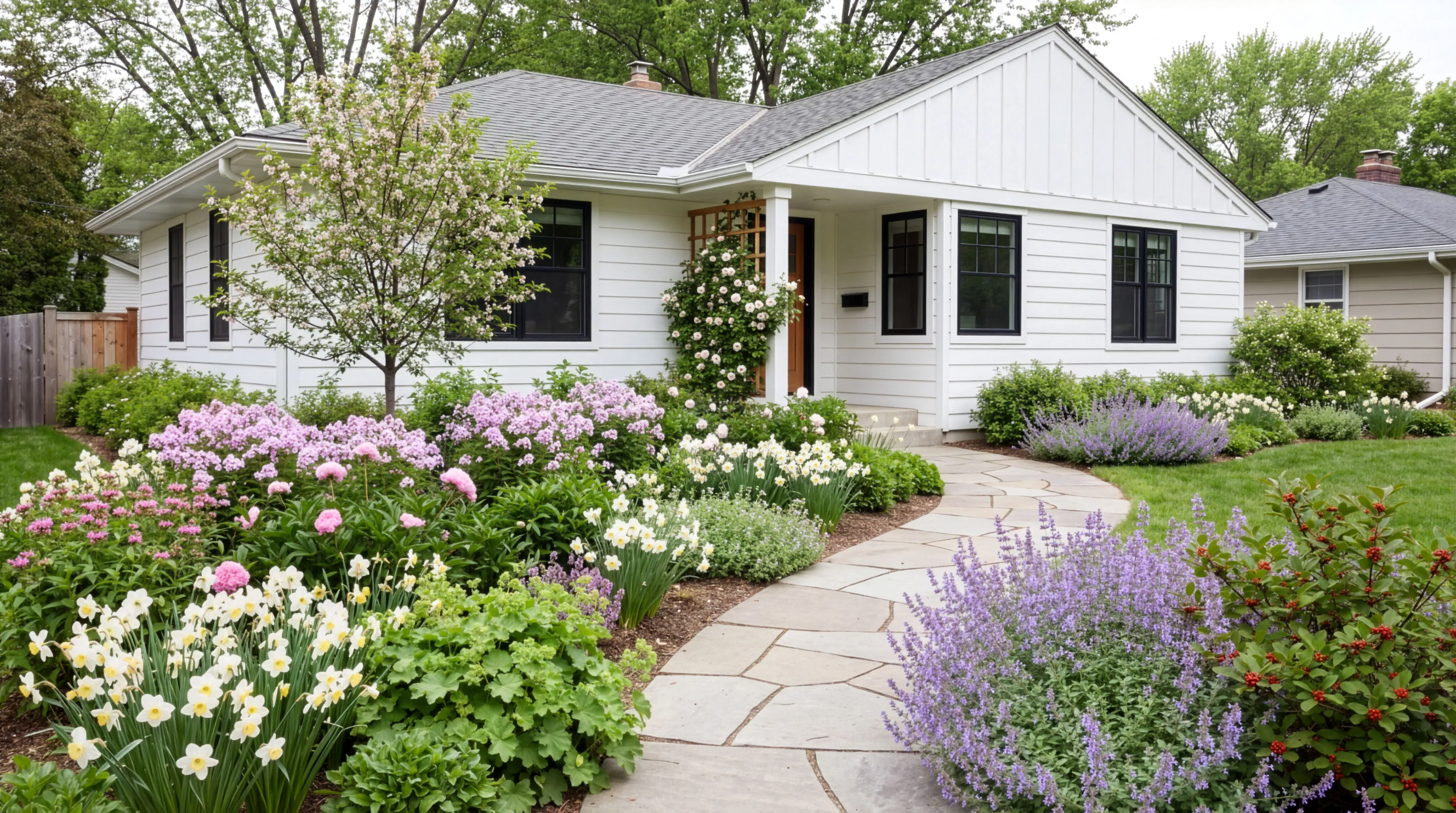
A modest white ranch house almost consumed by its planting -- intentionally. Pink alliums, white narcissus, soft pink phlox, a climbing rose threading up the porch post, and large sweeps of purple catmint give this front yard an English cottage quality that is unusual in a suburban Minnesota setting.
The planting scale relative to the house was a conscious decision. A larger house with the same plant palette would feel proportionate; on this modest footprint, the abundance of the planting becomes the defining feature. Visitors approach through a garden, not past a foundation bed. That transformation of the arrival experience was the goal.
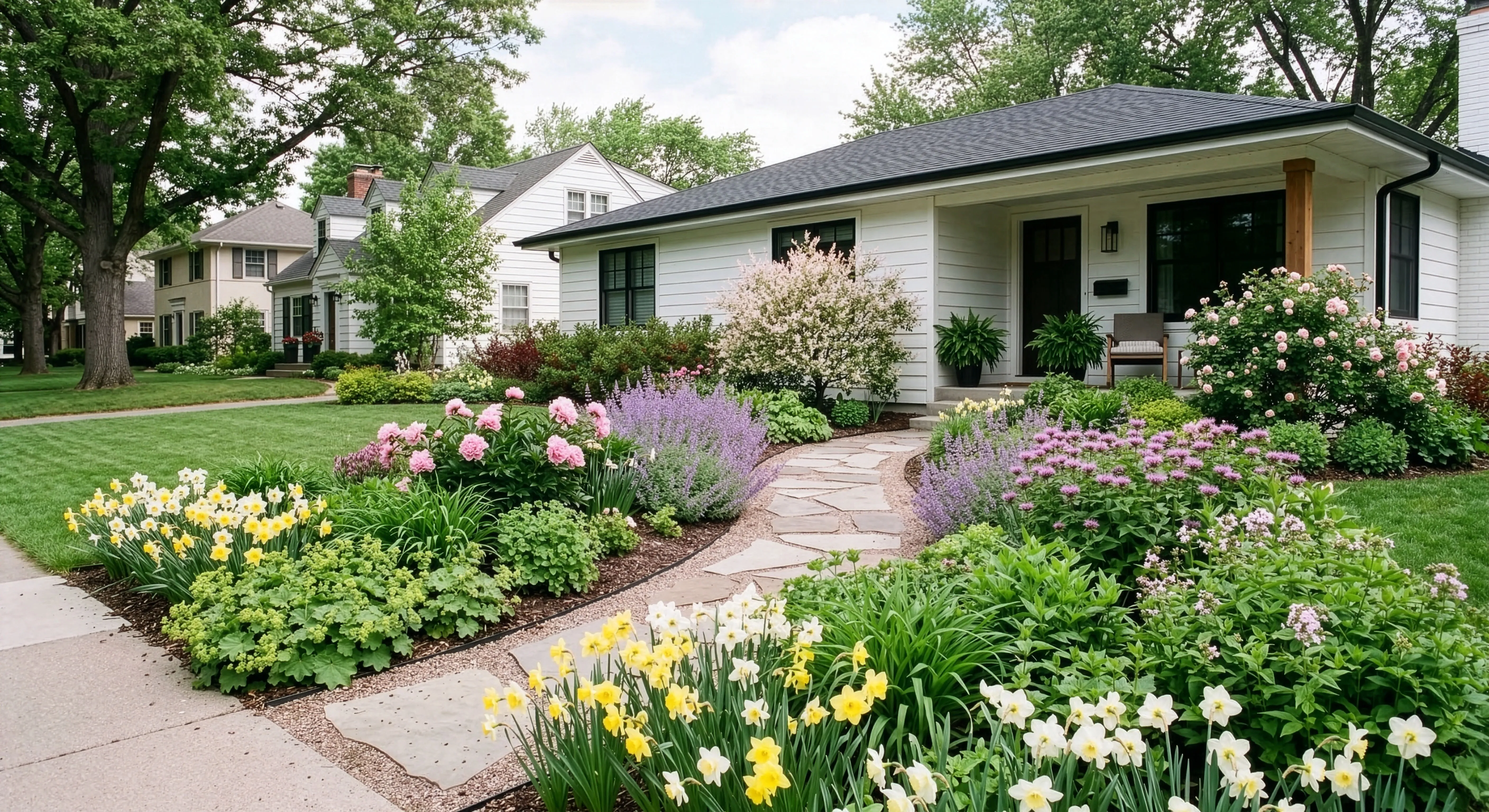
A long front bed running the full width of a white bungalow, organized as a spring color sequence: yellow narcissus in the foreground, pink peonies and white daisies in the middle bed, lavender catmint and pink alliums in the back layer against the foundation. The palette moves from warm to cool as the eye travels from the sidewalk to the house.
Spring-peak compositions have a precise window -- a few weeks of simultaneous bloom that the entire design is calibrated around. Outside that window the yard still reads as intentional; within it, the transformation is complete. This installation was timed so that narcissus, peonies, and catmint all peak together in late May, when the homeowner is most consistently outside.
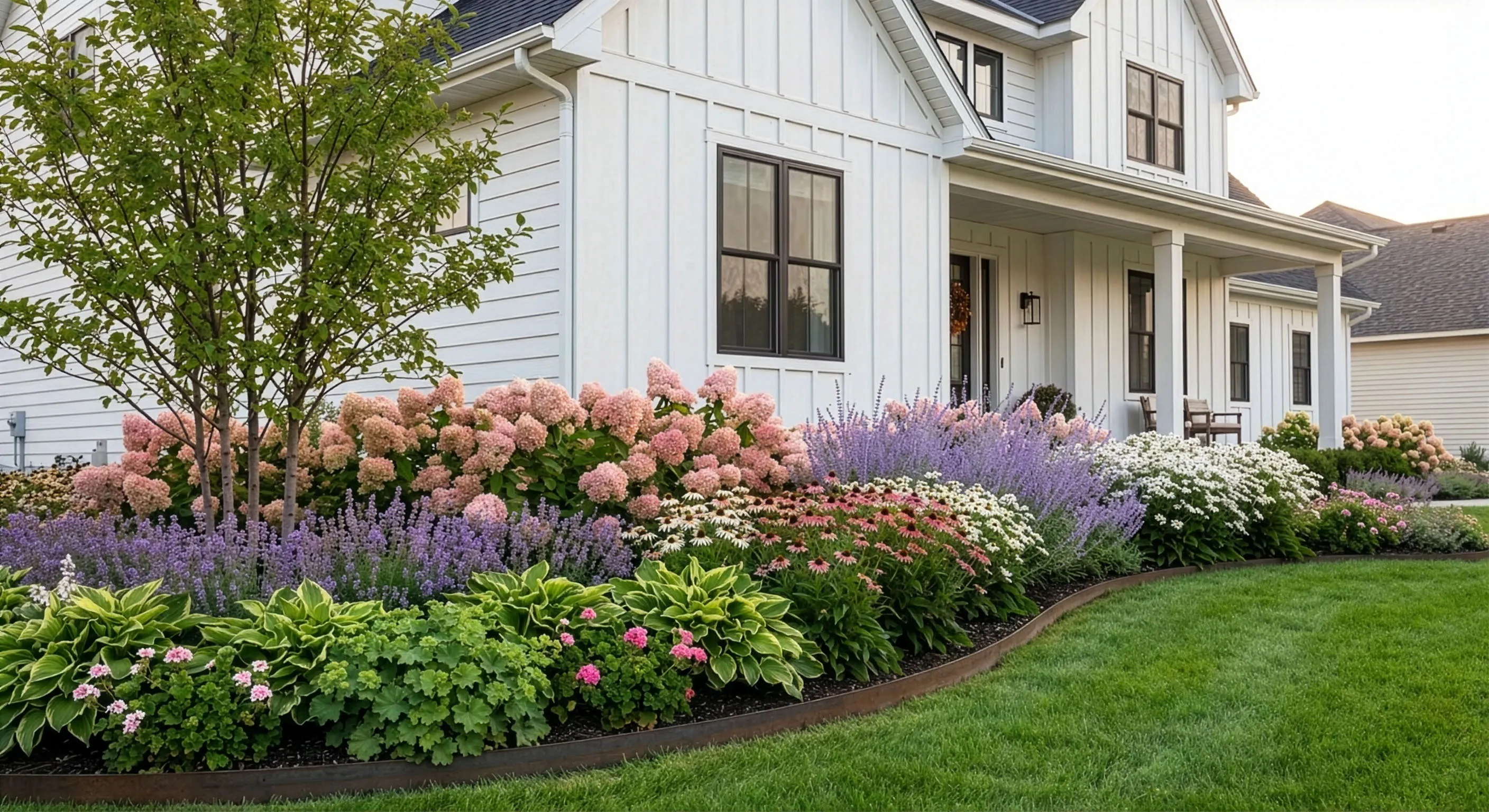
A contemporary white farmhouse with board-and-batten siding and black windows, paired with one of the most exuberant plantings we put in front of a modern exterior. Long linear beds run the full front face, layering hostas at the base, broad sweeps of blue salvia and lavender catmint in the mid-bed, and peach Incrediball hydrangeas at the back.
The contrast between the clean modern exterior and the soft abundant planting is deliberate. The dark metal edging at the bed boundary is the one concession to the architectural character of the house -- a precise hard line that grounds the abundance of the planting and prevents it from reading as accidental rather than designed.
Get a free quote. We walk the property, show you exactly what we'd build, and have a fixed-price proposal in your hands within 24 hours.
Get a Free Quote